How to Optimize Podcast Titles, Show Notes & Transcripts for Search Engines
The three on-page assets that decide whether an episode gets found, and the exact patterns that work in 2026.
If you only ever optimise three things on a podcast, optimise the title, the show notes and the transcript. Together they account for the vast majority of organic discovery, and they are entirely within your control. Most shows get all three subtly wrong, which is good news because small fixes compound fast.
Titles first. A great podcast title does three jobs at once: it tells a human what they will learn, it contains the words your audience would actually type into a search bar, and it differentiates the episode from everything else in the feed. The pattern we recommend is outcome-led. Start with the result, then the audience, then the method or guest. "Cutting churn in half for early-stage SaaS, with Anna Patel" beats "Episode 47: Anna on retention" by an order of magnitude in click-through. Keep it under 70 characters so it does not truncate in Apple Podcasts, Spotify or Google search results. Avoid season and episode numbers in the visible title. Put them in metadata if you must.
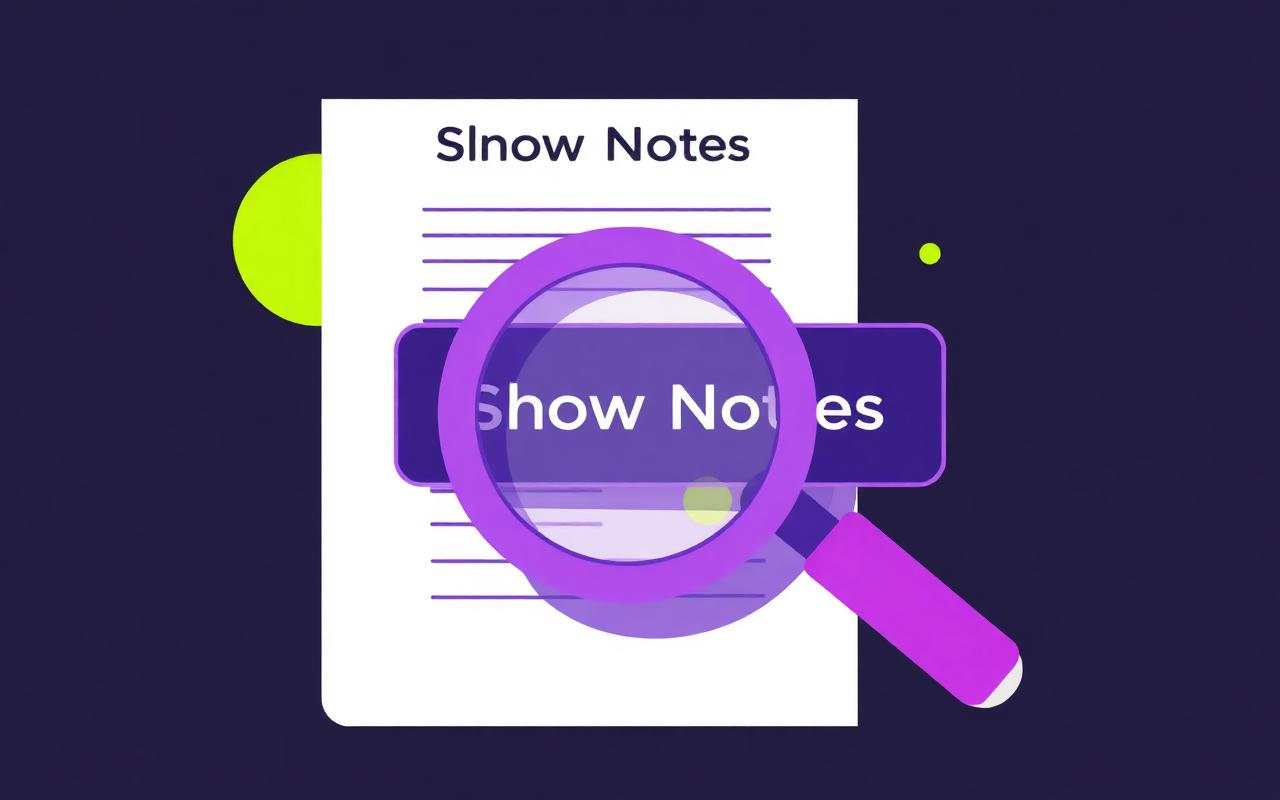
Show notes are the page that Google and AI engines actually read. Write them as a self-contained article. Open with one sentence that answers the question the episode poses. Follow with a 100 to 150 word summary that contains the keyword cluster naturally. Add timestamped chapters with descriptive labels, not just topics. "08:14 The pricing change that doubled trial conversion" is a chapter. "08:14 Pricing" is filler. Include a short guest bio with a link, every resource mentioned with a link, three to five pulled quotes, and a clear CTA at the bottom. Aim for 600 to 1,000 words.
Transcripts are the secret weapon. They turn a 45-minute audio file into a 7,000-word indexable document. Google reads them word for word. AI search engines extract sentences from them as cited answers. Hearing-impaired listeners access the content. Search engines understand the topical depth of your show. Generate the transcript with a tool like Descript or Whisper, then clean three things: speaker labels, brand names and any homophone errors that change meaning. Embed the transcript on the episode page in real HTML, not as a PDF or an iframe, and consider collapsing it visually with a "Read transcript" toggle so the page does not feel overwhelming. Crucially, the text must be in the source HTML so crawlers see it without executing JavaScript.
One last detail that punches above its weight: add VideoObject or PodcastEpisode schema to the page. It tells Google exactly which audio file goes with which episode and unlocks rich results in search. Most podcast hosts will not do this for you. Add it manually or use a plugin. Together, these three assets turn every episode you publish into a long-tail asset that earns downloads for years.